
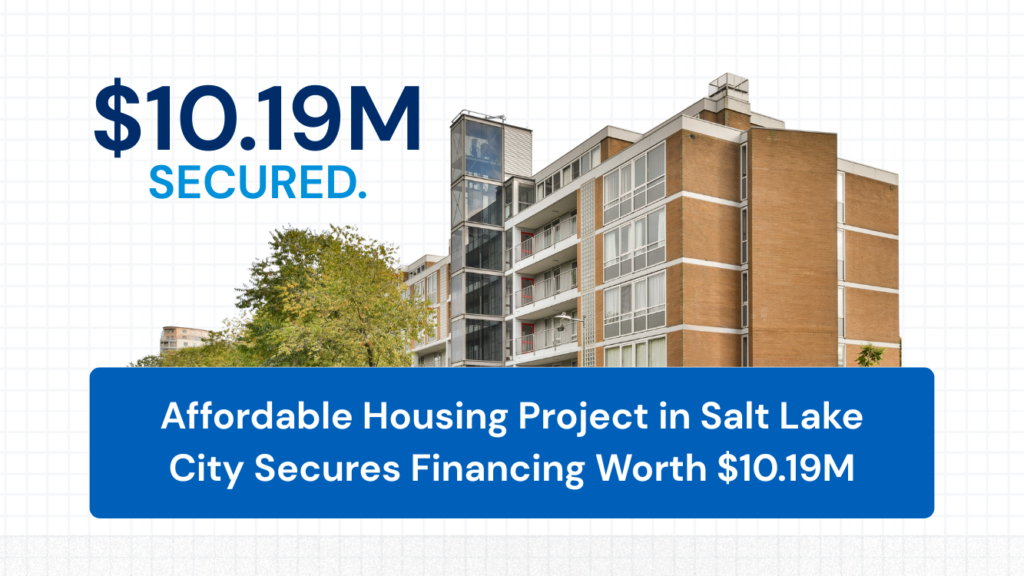
Salt Lake City’s affordable housing pipeline is moving forward with a $10.19 million financing package for a new 55-unit development, reinforcing how structured federal lending is directly increasing supply in constrained rental markets. The Salt Lake City affordable housing project, Book Cliffs Lodge, combines construction and permanent financing into a single loan, reducing development risk and accelerating delivery timelines.
Federal Financing Structure Reduces Development Risk and Speeds Delivery
The project secured financing through the U.S. Department of Housing and Urban Development’s 221(d)(4) program, which provides a 40-year fixed-rate loan covering both construction and permanent phases. This structure eliminates the need for refinancing after construction, lowering interest rate exposure and improving long-term project stability.
This financing model has become increasingly important as rising construction costs and higher interest rates have made traditional development financing more volatile. By locking in long-term debt upfront, developers can move projects forward that might otherwise stall.
Transit-Oriented Development Expands Access While Lowering Household Costs
The Book Cliffs Lodge site sits less than a quarter-mile from a TRAX light-rail station, placing it within a transit corridor that connects residents to jobs and services across the city. Transit-oriented affordable housing reduces total living costs by limiting reliance on car ownership and transportation expenses.
Salt Lake City has prioritized this model as population growth continues to strain housing supply. Locating affordable units near transit allows cities to increase density while maintaining accessibility to employment centers.
Project-Based Vouchers Lock in Long-Term Affordability
All 55 units will operate under a 20-year project-based voucher contract, ensuring rents remain affordable regardless of market fluctuations. Unlike tenant-based vouchers, these subsidies are tied to the property, preserving affordability over time.
This structure is critical in high-growth markets like Salt Lake City, where rising rents have outpaced wage growth and increased demand for subsidized housing. Waiting lists for affordable units have expanded as supply struggles to keep up.
Local Housing Shortage Drives Continued Pipeline Expansion
Salt Lake City has experienced sustained population growth, pushing more households into the rental market and intensifying demand for lower-cost units. The addition of 55 units represents incremental but necessary progress in addressing the city’s housing gap.
The Housing Authority of Salt Lake City, which is developing the project, has already delivered more than 1,000 units and supports over 3,000 households. Its continued expansion reflects a broader reliance on public agencies to lead affordable housing development.
Public-Private Financing Partnerships Are Now Essential
The involvement of JLL in structuring the financing highlights how private capital markets and federal programs are increasingly intertwined. Affordable housing developments now depend on layered financing that includes government-backed loans, tax credits, and advisory services.
Without these partnerships, many projects would not pencil out, particularly in markets where land and labor costs continue to rise.
What This Changes for Buyers, Investors, and Operators
This financing model directly alters how affordable housing projects are evaluated and executed.
For operators, the ability to secure a single, long-term loan reduces refinancing risk and stabilizes cash flow projections. That makes it easier to underwrite projects even in uncertain interest rate environments.
For investors, these developments offer lower yield volatility compared to market-rate multifamily assets because rents are supported by government-backed subsidies rather than tenant income alone.
For cities, transit-oriented affordable housing reduces infrastructure strain while increasing access to employment hubs.
Real-World Scenario: How Financing Structure Changes Project Viability
Consider a 50-unit affordable housing project in a comparable market.
Before:
A developer relies on short-term construction financing at variable rates, with a required refinance upon completion. If interest rates rise, the permanent loan becomes more expensive, potentially killing the deal or reducing affordability levels.
After:
Using a HUD 221(d)(4) loan, the developer locks in a 40-year fixed rate at the start. Construction and permanent financing are combined, eliminating refinancing risk and preserving affordability targets.
The result is a project that moves forward instead of stalling, directly increasing supply.
Key Constraint: Scale Remains the Limiting Factor
While the Book Cliffs Lodge project adds needed units, 55 apartments represent only a fraction of Salt Lake City’s total housing shortfall.
Affordable housing development remains constrained by land availability, construction costs, and reliance on federal programs with limited funding allocations. Even efficient financing structures cannot fully close the supply gap without sustained pipeline growth.
What Comes Next for Salt Lake City’s Housing Pipeline
Construction on Book Cliffs Lodge is expected to begin soon following permitting and design completion. The project is also tied to broader redevelopment efforts in the Ballpark neighborhood, where city leaders are focusing on revitalization and infrastructure upgrades.
As additional projects follow similar financing models, Salt Lake City’s strategy is becoming clearer: combine transit-oriented planning with long-term federal financing to steadily expand affordable housing supply.