
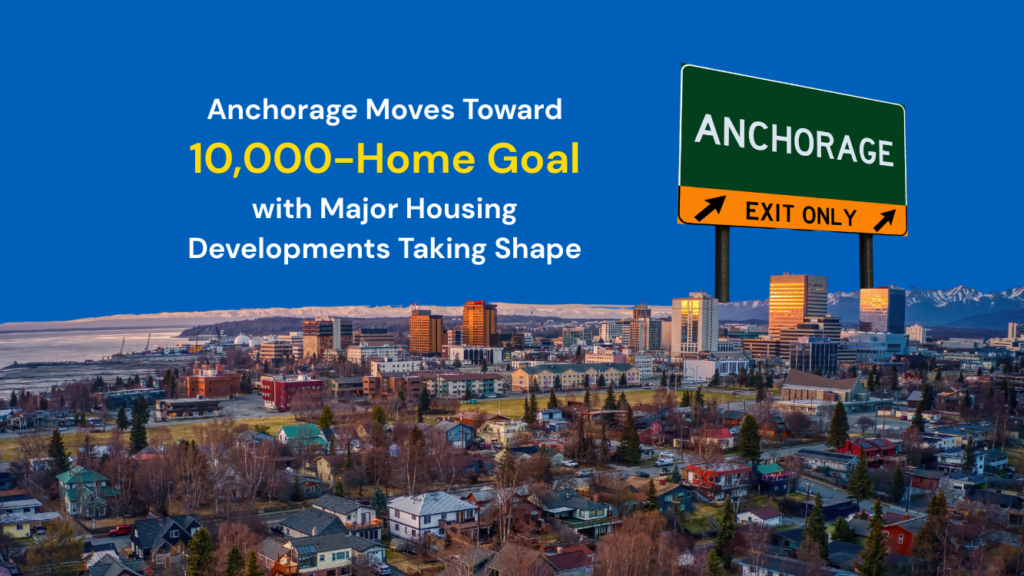
Anchorage housing supply expansion is gaining traction as developers push forward with new projects aimed at easing a severe housing shortage. The city’s plan to add 10,000 homes over the next decade reflects a race against rising prices, limited inventory, and workforce retention risks tied directly to housing access.
Developers Scale Projects to Meet Housing Shortage Targets
Anchorage officials and private developers have aligned around a measurable goal: deliver roughly 10,000 new housing units within ten years. This push responds to sustained population needs and mounting affordability pressures that threaten workforce stability in healthcare, education, and skilled trades.
The pipeline includes a mix of single-family homes, duplexes, and higher-density units designed to serve a broad income range. However, development timelines stretch across multiple years, forcing builders to predict future demand amid uncertain mortgage rates and economic conditions.
Luxury Segment Absorbs Supply Faster Than Mid-Market Homes
Anchorage’s real estate market shows a clear split. High-end homes, particularly those priced above $1 million, continue to attract steady demand. Projects like Panoramic Ridge have seen rapid lot absorption, driven in part by Baby Boomers leveraging accumulated home equity and investment gains.
In contrast, mid-range homes priced between $500,000 and $550,000 face slower sales. Buyers in this segment compare new construction with resale properties that often offer larger lots or lower prices, reducing the urgency to purchase newly built homes.
Limited Housing Inventory Keeps Prices Elevated
Anchorage’s inventory shortage remains acute. Fewer than 100 homes were listed citywide as of early 2026, with very limited options below $400,000. This scarcity continues to push average home prices toward $550,000, up sharply from pre-2020 levels.
Low inventory directly constrains affordability. Entry-level buyers face limited access, while competition intensifies across nearly all price points. This supply-demand imbalance reinforces the urgency behind the city’s expansion strategy.
Building Permits Signal Gradual but Insufficient Progress
Permit activity shows forward movement, but not at the pace required to meet long-term goals. Anchorage issued over 400 residential permits in 2025, with projections exceeding 500 this year. While this marks improvement, it still falls short of the annual output needed to reach 10,000 units within a decade.
Large-scale developments such as Holtan Hills and Powder Reserve West could significantly boost supply, but their timelines extend close to ten years due to infrastructure requirements and phased construction.
Infrastructure Costs Limit Speed of Housing Expansion
Infrastructure remains the primary constraint on Anchorage housing supply expansion. Developers must invest heavily in water systems, sewer lines, roads, and electrical networks before construction begins. These upfront costs increase financial risk and delay project timelines.
City officials have improved permitting efficiency, reducing administrative delays. However, without coordinated infrastructure investment, supply growth will continue to lag behind demand.
Applied Insight: What This Means for Buyers and Investors
Anchorage’s housing push changes how buyers and investors must approach the market.
Concrete scenario:
A buyer considering a $520,000 new construction home in East Anchorage may now negotiate seller credits or a mortgage rate buydown. Builders facing slower mid-market absorption often offer incentives to compete with resale listings.
Before vs. after:
- Before: Limited new construction leverage; sellers dictated pricing amid low inventory.
- After: Buyers in the mid-range gain negotiation power through builder incentives, even as overall supply remains tight.
Mechanisms in play:
- Rate buydowns reduce monthly payments in early loan years
- Seller credits offset closing costs
- Flexible financing structures attract hesitant buyers
Constraint:
These incentives do not solve the core issue, limited inventory. Buyers still face high base prices, and developers must balance margins against rising infrastructure costs.
For investors, the luxury segment offers stronger absorption and faster returns, while mid-market projects require longer holding periods and pricing flexibility.
What Comes Next for Anchorage Housing Supply Expansion
Anchorage’s housing strategy now hinges on execution speed. Large developments, increased permits, and emerging neighborhoods like Spenard signal momentum. Yet the gap between supply and demand remains wide.
If infrastructure investment accelerates and development pipelines stay active, the city could stabilize prices over time. If not, affordability pressures will persist, limiting workforce growth and economic expansion.