
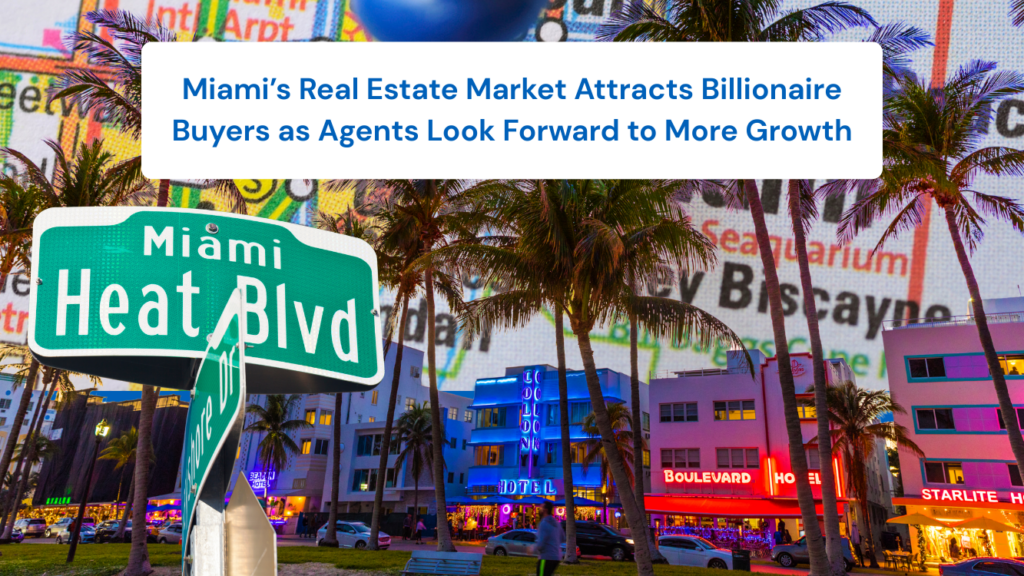
The Miami luxury housing boom is pushing home prices higher and tightening access across South Florida, as wealthy buyers flood the market and reshape supply dynamics. High-end transactions and sustained migration trends now drive a measurable outcome: rising costs for both luxury and workforce housing.
Source: South Florida real estate conference and luxury market summary (Primary source provided)
Wealth Influx Accelerates Price Growth Across South Florida
Industry leaders report a sustained influx of high-net-worth individuals into Miami, drawn by low taxes, business-friendly policies, and lifestyle advantages. This migration has elevated Miami into one of the most active luxury real estate markets in the United States.
National data confirms the trend. Florida has ranked among the top states for net domestic migration since the pandemic, with high-income households driving a disproportionate share of housing demand.
Record Luxury Deals Reset Market Benchmarks
High-profile purchases now set new pricing ceilings. A $170 million waterfront estate deal in Miami-Dade County established a new residential record, reinforcing the region’s global appeal to ultra-wealthy buyers.
These transactions influence broader pricing. When ultra-luxury sales rise, they compress inventory across tiers, as sellers reposition listings upward and developers prioritize high-margin projects.
Supply Expansion Fails to Match Demand
Developers have responded with new towers, mixed-use projects, and luxury communities across Miami. Construction activity has surged over the past decade, with thousands of new units delivered.
Yet supply still lags demand in key segments. Data shows that inventory shortages persist nationwide, especially in desirable metro areas, keeping upward pressure on home prices.
Affordability Declines as Prices Outpace Incomes
The same forces driving the Miami luxury housing boom now strain affordability. Rising property values and living costs make it harder for middle-income and working-class residents to compete.
This pattern aligns with broader housing metrics. Housing affordability has declined sharply in recent years as home prices have grown faster than wages in many U.S. markets.
Infrastructure Strain Signals Secondary Risks
Rapid population growth has increased pressure on transportation, schools, and public infrastructure across South Florida. Congestion and service demand now represent measurable risks tied to continued expansion.
Urban economists note that fast-growing metro areas often face lagging infrastructure investment, which can reduce long-term housing accessibility and economic efficiency.
Applied Insight: Buyers and Investors Face a New Cost Structure
The Miami luxury housing boom changes how deals get structured across the market. Buyers, investors, and operators must adapt to higher entry costs and tighter inventory.
Concrete scenario:
A mid-level buyer targeting a $600,000 condo in 2020 could secure a 10% down payment and standard financing. In 2026, that same property may list at $850,000. The buyer now needs either a larger down payment, seller concessions, or a rate buydown to maintain affordability.
Before vs. after comparison:
- Before: Lower prices allowed conventional loans with minimal concessions
- After: Higher prices force reliance on tools like 2-1 rate buydowns or adjustable-rate mortgages to reduce monthly payments
Mechanisms in play:
- Seller credits to offset closing costs
- Rate buydowns to manage monthly payments
- Increased use of jumbo loans in luxury segments
- Delayed entry or shift to multifamily housing for workforce buyers
Constraint and tradeoff:
These tools reduce short-term payment pressure but increase long-term cost or risk. A rate buydown lowers initial payments but resets later, while higher leverage increases exposure if prices stabilize or fall.
Long-Term Outlook Supports Continued Price Pressure
Market participants remain confident in Miami’s long-term trajectory. Continued migration, expanding finance and tech sectors, and global demand support sustained housing activity.
However, the same drivers that fuel growth also reinforce cost pressure. Without significant increases in housing supply or affordability programs, prices will likely remain elevated.
What Comes Next for South Florida Housing
Miami’s evolution into a global real estate hub will continue to attract capital and high-income residents. Developers will likely expand luxury inventory, while policymakers push for workforce housing solutions.
The measurable outcome remains clear: costs will stay elevated unless supply expands faster than demand. That imbalance defines the next phase of the market.