
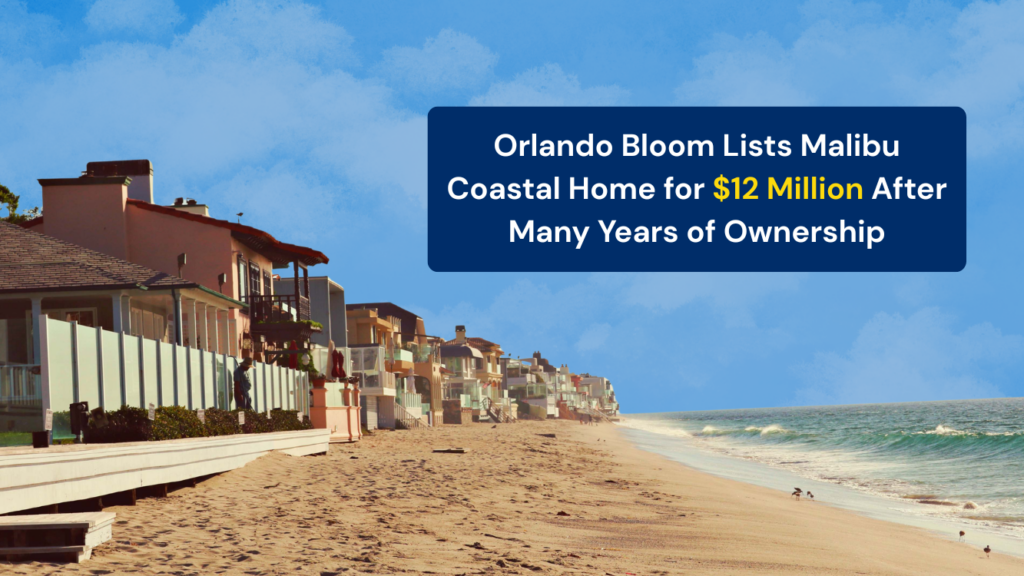
The Orlando Bloom Malibu home listing at $12 million highlights a measurable outcome: renovation-driven value creation in high-end coastal real estate. After purchasing the property for roughly $2.5 million in 2011, Bloom transformed the home through extensive upgrades, positioning it for a potential multi-fold return in today’s resilient Malibu luxury market.
Long-Term Ownership and Renovation Amplify Property Value
Orlando Bloom held the Malibu property for over a decade, a timeline that aligns with one of the most reliable wealth-building strategies in real estate: long-term appreciation combined with capital improvements. He purchased the home with Miranda Kerr for approximately $2.5 million and invested heavily in renovations that reportedly exceeded the purchase price.
This level of reinvestment reflects a shift from cosmetic upgrades to structural repositioning, open floor plans, integrated living spaces, and outdoor enhancements that align with modern buyer preferences.
Design-Led Differentiation Drives Premium Pricing
A collaboration with Roy McMakin elevated the home beyond standard luxury inventory. Custom furnishings, integrated design elements, and a blend of modernist and Japanese-inspired aesthetics create a differentiated product in a crowded high-end market.
In luxury real estate, design functions as a pricing lever. Properties with architectural cohesion and bespoke interiors often command higher price-per-square-foot metrics compared to generic renovated homes.
Malibu Market Stability Supports High-End Listings
The listing enters a stabilizing market in Malibu, where demand for ocean-view, privacy-oriented homes remains strong despite recent environmental and economic disruptions. Inventory has improved, but premium properties continue to attract affluent buyers seeking turnkey residences.
Luxury markets tend to recover faster due to cash-heavy buyers and limited supply in prime coastal zones. Malibu, in particular, maintains pricing power due to geographic constraints and sustained demand from entertainment and tech sectors.
Lifestyle Features Align With Buyer Priorities
The property sits above El Matador State Beach, offering ocean views, gated privacy, and indoor-outdoor living, features that consistently rank among top buyer priorities in coastal markets.
Outdoor amenities such as pools, patios, and view corridors now function as essential value drivers rather than optional upgrades. Post-pandemic buying behavior has reinforced demand for lifestyle-oriented properties that support both leisure and remote work.
Changing Living Patterns Trigger Asset Liquidation
Bloom’s decision to sell reflects a broader trend: high-net-worth individuals optimizing property portfolios based on usage rather than sentiment. The home has not served as his primary residence for several years and was recently rented, signaling a shift from personal use to income generation before divestment.
This pattern mirrors a wider move among affluent owners who reallocate capital into higher-performing or more frequently used assets.
Applied Insight: What This Means for Buyers and Investors
This listing illustrates how value creation in luxury real estate increasingly depends on strategic reinvestment and timing, not just location.
Concrete scenario:
An investor purchases a $3M coastal home, invests $2M in structural redesign and high-end finishes, and holds the property for 10 years. If market appreciation and design premiums align, the property could list above $10M, similar to Bloom’s trajectory.
Before vs. after:
- Before: Segmented layout, dated finishes, limited outdoor integration
- After: Open-plan design, curated interiors, lifestyle-driven outdoor spaces
The transformation shifts the property from average luxury inventory to a premium, differentiated asset.
Mechanism in practice:
Buyers in this segment often use cash or jumbo loans, but sellers can still deploy incentives such as seller credits for closing costs or temporary rate buydowns to widen the buyer pool without reducing the headline price.
Constraint or tradeoff:
High renovation costs increase risk exposure. If market conditions soften or design trends shift, owners may not fully recover capital expenditures. Liquidity also narrows at higher price points, extending time on market.
What Comes Next for the Malibu Luxury Segment
Bloom’s listing will serve as a market signal. If it achieves or exceeds its $12 million asking price, it will reinforce confidence in renovation-led appreciation strategies across Malibu’s upper tier.
If it lingers, it may indicate growing price sensitivity, even among affluent buyers, especially as inventory gradually expands.
Either outcome will shape pricing expectations for similar properties and influence how investors allocate capital in coastal California markets.