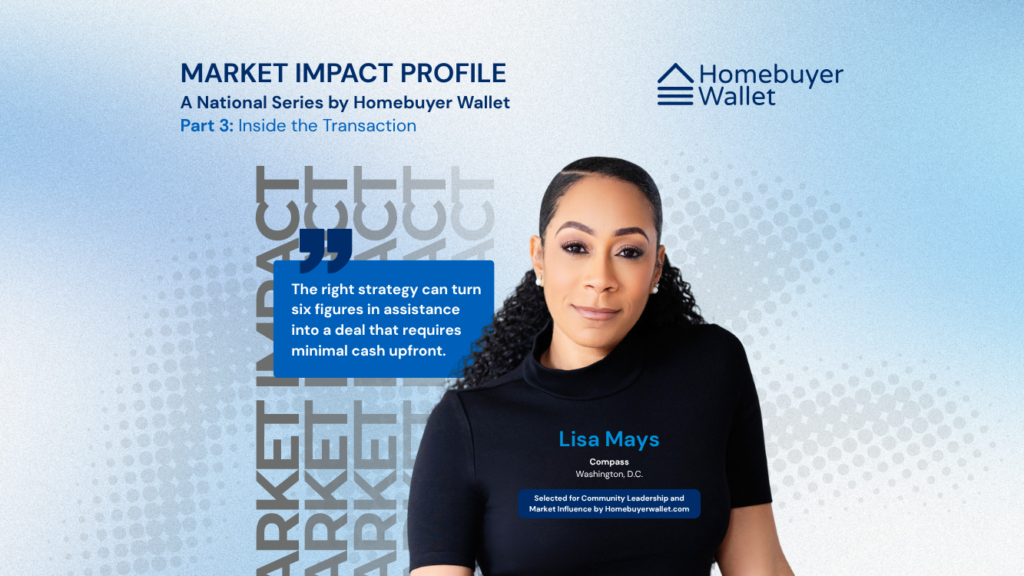
Lisa helped a first-time buyer secure a $399,000 condo in Washington, DC, with just over $4,000 out of pocket by structuring the deal around down payment assistance instead of traditional financing. The buyer accessed approximately $104,000 through the Home Purchase Assistance Program (HPAP), shifting what is typically the largest barrier to entry into a layered financing solution that preserves liquidity from day one.
The result did not come from negotiating minor credits or stretching budget limits. It came from replacing the down payment entirely with program capital and aligning every part of the transaction, from lender selection to timeline expectations, around that structure. As Lisa puts it, “Monthly payment mattered more than max approval,” and the entire deal was built to reflect that priority.
Upfront Cash Is a Structure Problem, Not a Price Problem
In Washington, DC, high home prices often frame the buying conversation, but Lisa approaches the constraint differently. She treats upfront cash as a structural issue rather than a fixed requirement, focusing on how capital enters the deal instead of assuming it must come from the buyer.
In this case, the buyer was a well-qualified DC-based consultant with strong income but a clear goal: avoid becoming house poor. Rather than pushing purchasing power higher, Lisa reoriented the strategy toward minimizing cash to close. “You don’t solve this by spending more,” she says. “You solve it by structuring better.”
Program Capital Replaces the Traditional Down Payment Layer
The transaction centered on the Home Purchase Assistance Program (HPAP), offered by the District of Columbia government. The program provided approximately $104,000 in assistance, which effectively replaced the buyer’s down payment and significantly reduced the need for upfront cash.
This was not a supplemental benefit layered onto a conventional loan. It became the foundation of the deal. By using HPAP as the primary capital source, the buyer avoided bringing tens of thousands of dollars to closing and instead limited total out-of-pocket costs to approximately $4,155.
Closing costs were largely absorbed within the structure, and the only meaningful upfront expense outside of closing was the home inspection, which ranged between $350 and $450. The financial shift was not incremental, it fundamentally changed how the purchase was executed.
Execution Depends on Lender Specialization and Early Alignment
The structure only works if the financing is handled correctly from the beginning. Lisa ensured the buyer was pre-qualified with a lender experienced in HPAP and similar assistance programs before any property search began.
That early alignment allowed Lisa to focus entirely on property selection while the lender managed program compliance, documentation and layering. “The right lender makes or breaks these deals,” she says. “If they don’t understand the program, everything slows down or falls apart.”
This separation of roles created clarity throughout the process. Each party operated within their expertise, but the coordination between them remained tight and continuous.
Longer Timelines Trade Speed for Liquidity Preservation
The transaction closed in approximately 45 days, a timeline shaped in part by HPAP processing requirements and the holiday calendar. This was not a delay caused by inefficiency, but a predictable outcome of using program-based financing.
Lisa set that expectation early, framing the timeline as a strategic tradeoff. “This isn’t a fast close, but it’s how you keep cash in your pocket,” she says. The buyer entered the contract with a clear understanding that speed would be secondary to preserving liquidity.
Because that expectation was established upfront, the timeline did not introduce stress into the transaction. It functioned as part of the plan rather than a deviation from it.
The True Cost of Buying Shifts From Cash to Monthly Strategy
The defining decision in this transaction was not the purchase price or even the assistance amount. It was the buyer’s decision to prioritize monthly affordability over maximum approval, which shaped every subsequent step.
By removing the need for a large upfront investment, the structure allowed the buyer to retain reserves and maintain flexibility after closing. The financial burden moved from a single large payment at closing to a predictable monthly obligation aligned with the buyer’s income and comfort level.
Reducing the cost of buying is achieved by replacing upfront cash with structured capital.
Coordinated Transactions Turn Complex Programs into Predictable Outcomes
What appears complex on paper becomes executable through coordination. Lisa worked in lockstep with the lender and program administrators to ensure documentation, approvals and timelines stayed aligned throughout the process.
This coordination prevented the common breakdowns associated with assistance programs, where miscommunication or inexperience can derail a deal. Instead, each step followed a defined sequence, allowing the structure to hold from contract to closing.
The outcome, a $399,000 home purchased with just over $4,000 out of pocket, was not an outlier created by luck. It was the result of a deliberate strategy where every decision supported the same objective: reduce upfront cost without compromising long-term stability.
Want to connect with Lisa? You can follow her on Facebook, Instagram, Tiktok, and LinkedIn, or send her an email directly.